Otoplasty (Ear Surgery)
Symmetrical, natural, and harmonious ear contours.
"Otoplasty is a cosmetic procedure to reshape, reduce, or reposition protruding ears. By re-sculpting the cartilage via a discreet incision behind the ear, the surgeon achieves natural symmetry and an aesthetically pleasing proportion to the face."
Your journey
Anesthesia & Marking
Anesthesia administration (local for adults, general for children) and precise cartilage planning.
Concealed Incision
A small incision is made within the natural crease behind the ear.
Cartilage Reshaping
The cartilage is reshaped, contoured, or secured with internal sutures to achieve the desired angle.
Suturing & Stabilization
Internal sutures permanently fix the ear position, followed by fine cosmetic skin closure.
Dressing Application
A protective compression bandage is applied to preserve the newly contoured ears.
Rehabilitation
Outpatient release
Patient can return home 1 to 2 hours post-procedure following initial check-up.
Suture removal
Dressing change and removal of external sutures (if non-absorbable).
Nighttime headband
Daytime bandage is removed; a protective soft headband is worn only while sleeping.
Sports activities
Light, non-contact athletic activities and light fitness can be resumed.
Full recovery
Cartilage and soft tissues fully heal; natural skin sensitivity is completely restored.
Scar progression
How the scar changes — from surgery to final result
Scars are placed within natural skin folds and become virtually unnoticeable over time. Proper care and sun protection speed up the fading process. For most patients, the scar blends with the surrounding skin within 12–18 months.
Suture removal
The scar is pink-red and slightly raised. Scar care begins — silicone gel or tape.
Active healing
Colour darkens to deep pink. The scar may thicken — this is normal. Avoid sun exposure and wear compression garments.
Maturation
The scar lightens, softens, and flattens. Itching and heightened sensitivity fade.
Final appearance
The scar takes on a silvery-beige tone and becomes barely visible, aligning with underwear lines.
Photo results
Before and after — real patients
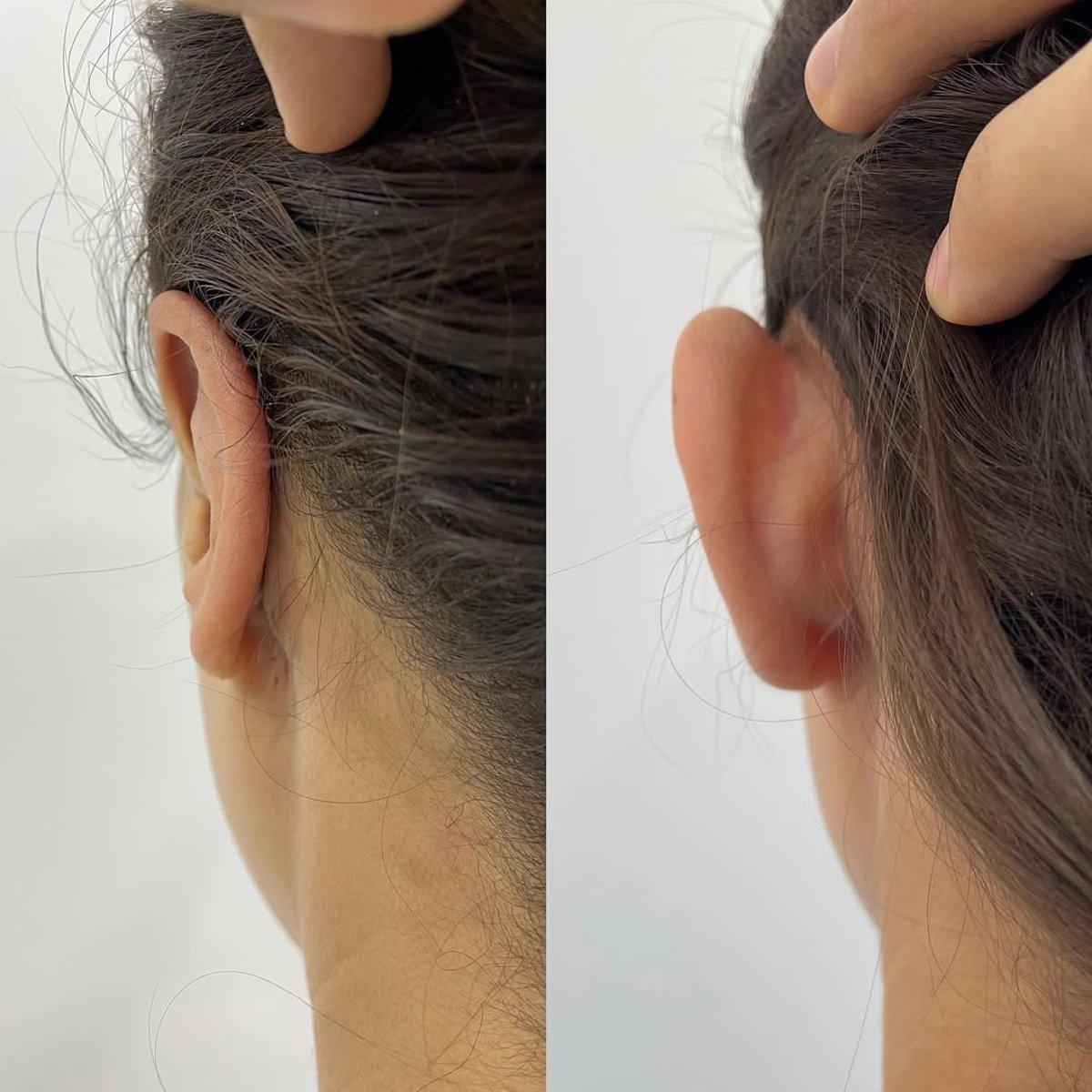
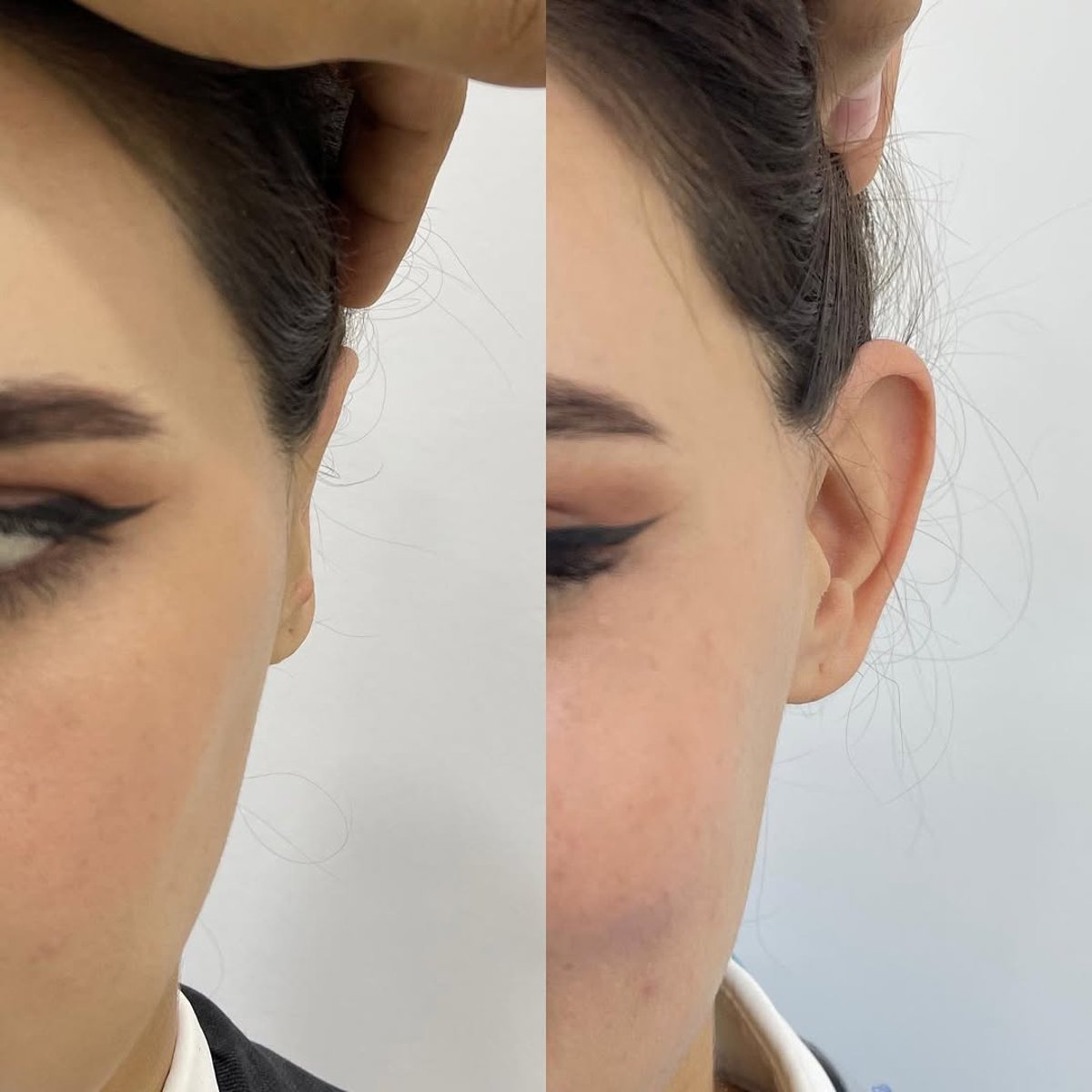
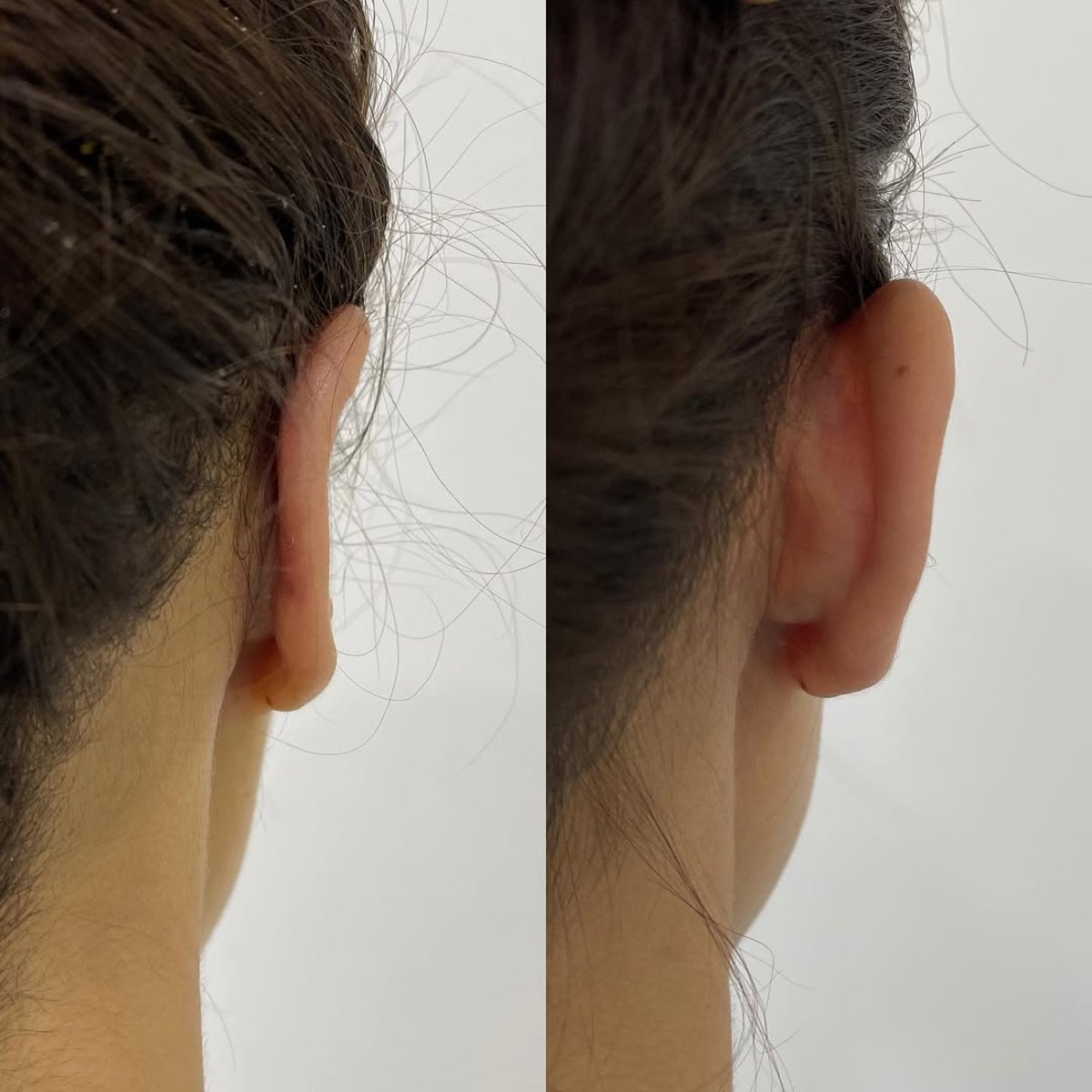
Procedure videos
Process, results, and patient testimonials
Who is it for?
Ideal if you have
- Protruding ears or significant inter-ear asymmetry
- Congenital or post-traumatic ear cartilage deformities
- Deformed, stretched, or torn earlobes
- General dissatisfaction with overall ear shape or proportion
Not recommended if
- Acute ear infections or localized skin inflammations
- Coagulation and bleeding disorders
- Propensity for hyper-keloid scar formation
- Active oncology or severe systemic health conditions
Frequently asked questions
Ready to begin?
Book a consultation
with Dr. Maruf
Personal. Confidential. No obligation.